



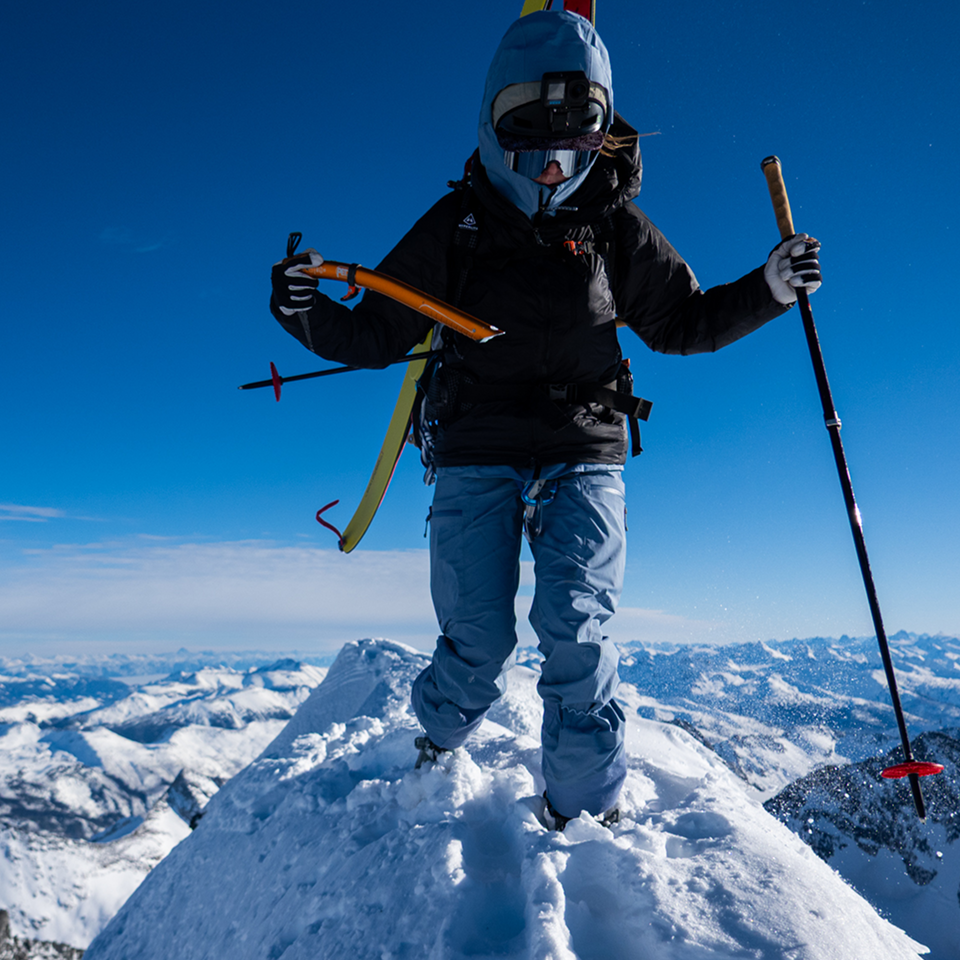

COROS Pro athlete Mali Noyes has built her reputation on big, committing days in the mountains, one after another. In 2025 she skied all 93 lines in Utah's Chuting Gallery in 47 days, a project that tested her skiing, her endurance and her decision-making in avalanche terrain day after day.
"I've gained a lot of fitness over the years," she says. "It's just come from skiing as much as I can and going for objectives and trips into far, remote places."

Four days for one line
The Comstock Couloir is one of those objectives. It sits deep in the Selkirks in British Columbia, is listed in The Fifty Classic Ski Descents of North America, and is known for sending skiers home. Mali had been turned back from it once before, with Cody Townsend's crew filming The Fifty. In January 2026 she returned with Spencer Harkins, Emrik Villeneuve and Laurent Mathieu for four days and three nights in the backcountry.
- Day 1: A long approach over Asulkan Pass with full winter camping gear.
- Day 2: Scouting the line and checking conditions.
- Day 3: The push. A 14-hour day up the glaciated face of Mount Selwyn, along the ridge to the summit of Mount Dawson and down to the col above the Comstock, with three rappels on the ridge and two more in the couloir itself.
- Day 4: Skinning back over the pass to the car.
Mali became the first woman to ski the line, and her group was only the third ever to complete it.
"This time I knew I was a good enough skier," she says. "I was part of the decisions and discussions."
The full trip in numbers
- Distance: 53.9 km
- Elevation gain: 6,980 m
- Time: 34 hours 45 minutes
- Energy: 14,300 kcal
Proven on the Comstock: COROS APEX 4
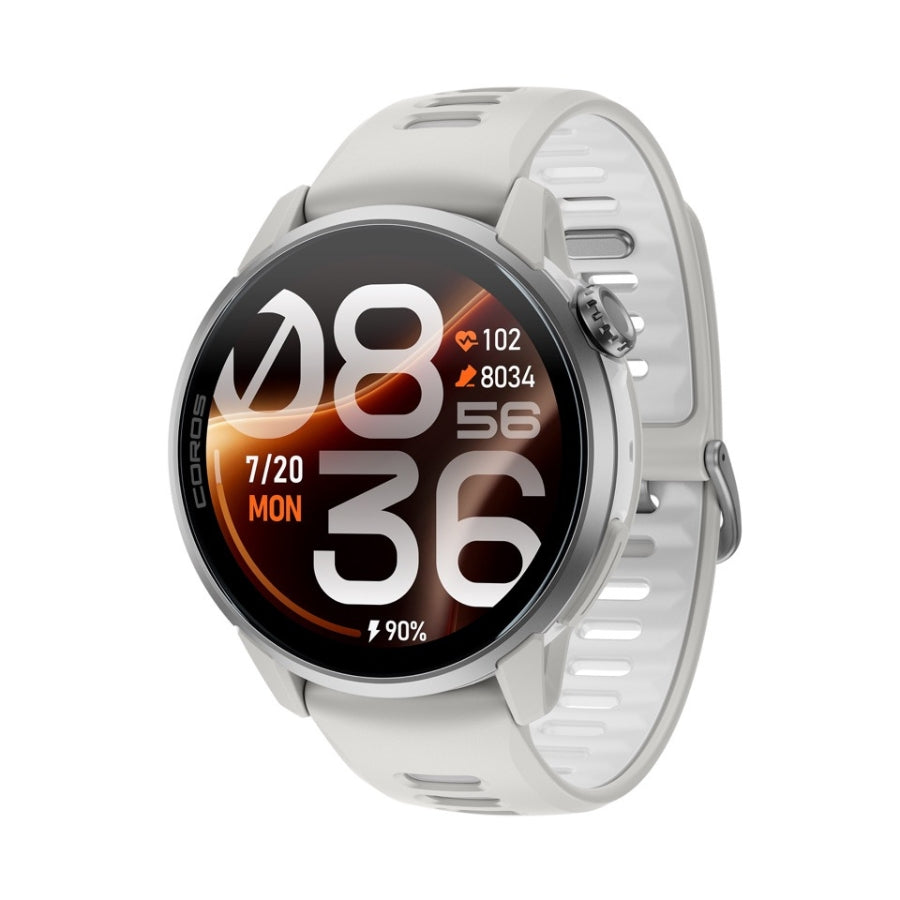
Planning, partners and judgement got Mali down the Comstock. Her COROS APEX 4 42mm was on her wrist the whole way, from the climb over Asulkan Pass to the exit four days later. Here is how it handled conditions with very little room for gear to fail.
1. Data you can trust when it matters
On a big objective, knowing where you stand against your plan is part of every good decision. On the Comstock, the team left camp at 5 a.m. and reached the ridge by 11, right on schedule. Then the knife-edge traverse took far longer than expected. By the first rappel the sun was setting, and they finished the couloir in the dark.
Delays like that build slowly over a long day, and you may not notice until daylight is running out. On the APEX 4 you see distance, elevation and vertical speed live on your wrist, so you know whether you are still on schedule, how much ground is left and how fast you are moving. That makes it easier to adjust early and decide when to push on and when to turn around.

2. Navigation without a signal
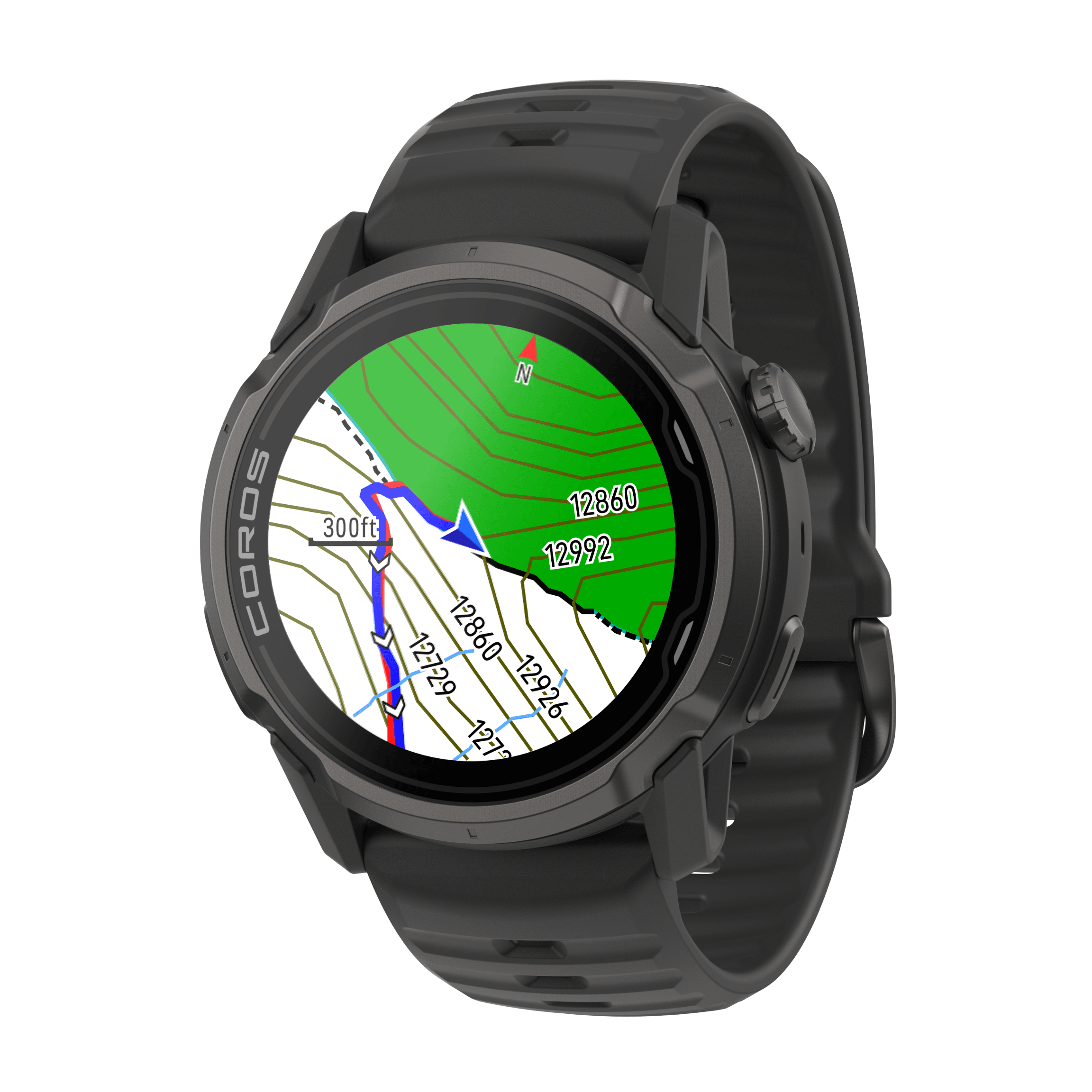
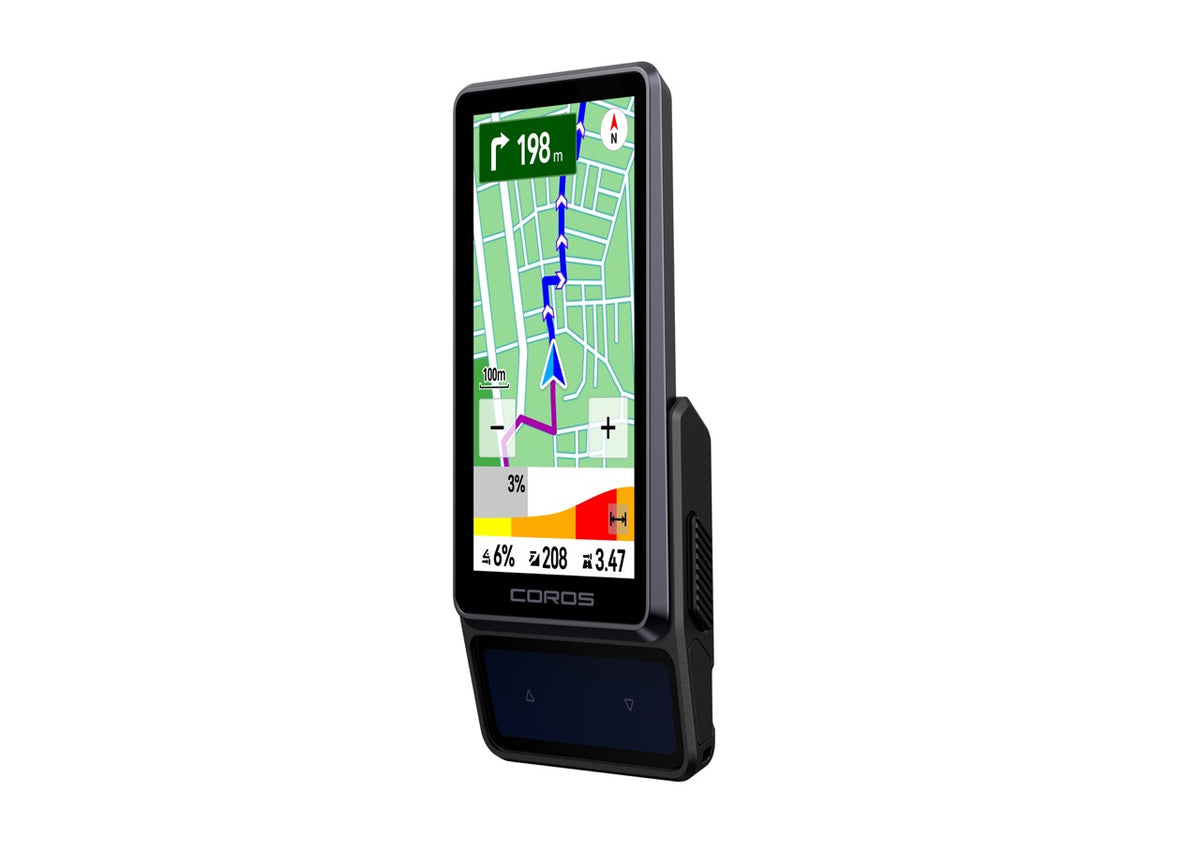
The Dawson drainage is far from any mobile coverage. The APEX 4 stores downloadable global Topo and Landscape maps, so the terrain is on your wrist with no signal needed. Load your route before you leave the trailhead and you can check your position against it at every decision point. The Memory-in-Pixel touchscreen stays easy to read in bright light on snow.
Dual-frequency GPS and COROS' vertical GPS algorithms are built to hold an accurate position in tight couloirs, on exposed ridges and in deep mountain terrain. On the Comstock, the watch recorded the whole route: the skin track up to the ridge, across the summit of Mount Dawson and down through the couloir to the apron.

3. Battery that outlasts the biggest day
Cold is hard on batteries, and many devices lose charge fast or shut down in freezing temperatures. Mali's APEX 4 42mm tracked the whole Comstock push as one continuous activity: 14 hours and 9 minutes, from the 5 a.m. start to the return to camp around 7 p.m. The 42mm is rated for up to 41 hours with All Systems GPS, so there is plenty of margin to record the whole day without a power bank.

4. Managing effort and recovery across every day
On a multi-day trip, the biggest day is rarely the only one that counts. Overdoing it early can leave you short of strength and judgement on the day you need them most. The APEX 4 helps you keep track of effort and recovery throughout the trip:
- Heart rate: Keep the effort steady on long approaches and save energy for the push. On the Comstock day, Mali averaged 113 bpm over 14 hours and peaked at 163.
- Training Load: See how much each day takes out of you. Mali's summit day logged a Training Load of 558, far above any other day of the trip.
- Recovery and HRV: Check how well you recovered overnight before deciding how hard to push the next day.
- Sleep: Cold tents and nerves before a big day are hard on sleep. Mali's nights went from easy, to restless before the push, to deep recovery afterwards. Knowing how rested you are helps you set your pace and start time.
Read more: How to improve sleep quality – COROS Coach Dr. Peter Tierney on sleep quantity, quality and consistency.

The bar has moved
By skiing the Comstock, Mali showed that one of North America's most demanding lines is within reach for women. It took years of learning, one turnaround and the confidence to help make every call on the mountain. The Comstock is now off her dream list, and she is already planning the next objective.
"That's what drives me to want more," she says.